A web ad is a form of advertising on the World Wide Web. This form of online advertising entails embedding an advertisement in a web page. Web ads link to the website of the advertiser. So, they help drive traffic to websites and they help create online sales.
Web ads function in the same way that traditional advertisements function: They notifying consumers of the product or service and present reasons why the consumer should choose that product.
Web ads differ from printed advertisements in that they can be monitored in real-time and are almost always tailored to the viewer’s interests or demographic. Interaction and behavior are often tracked.
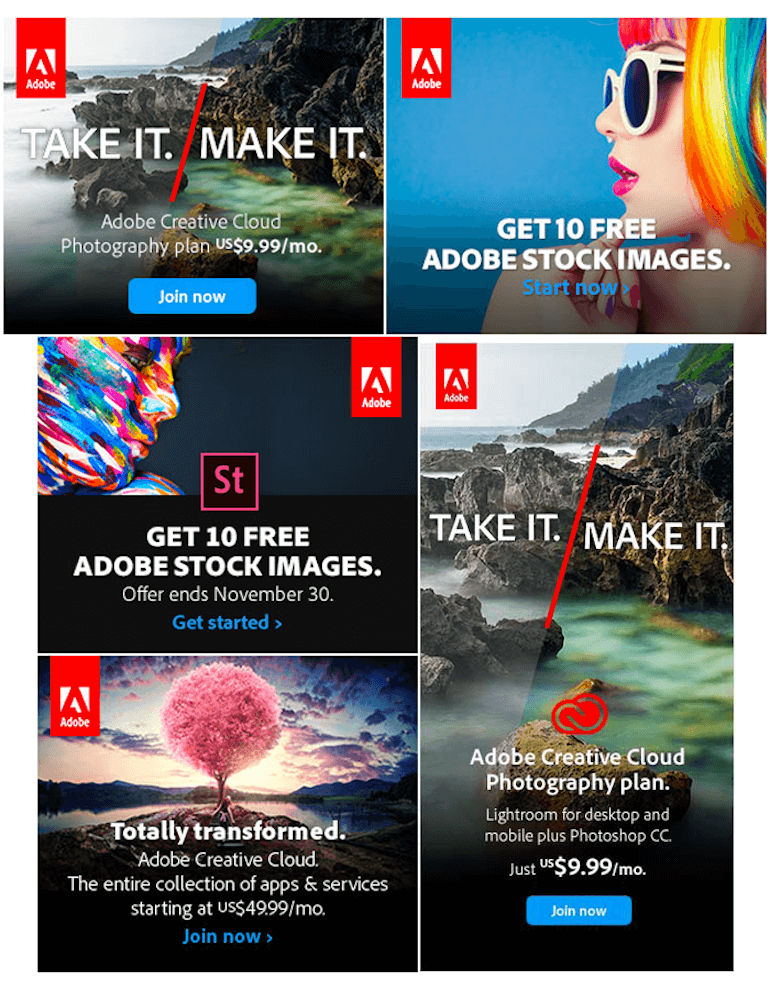
Website Ad Trends
The trends for web ads include ad personalization, non-intrusive ads, and data analytics. With the amount of user data available, ad personalization is becoming the norm. Advertisements that are individualized based on the viewer’s demographic (name, age, device, geographic location and interests) are expected to increase.
Website visitors are tired of intrusive ads. Pop-ups, email signup banners, and unexpected video commercials are ruining consumer experiences. Instead, advertisements will focus on being helpful to customers, providing value and quality first.
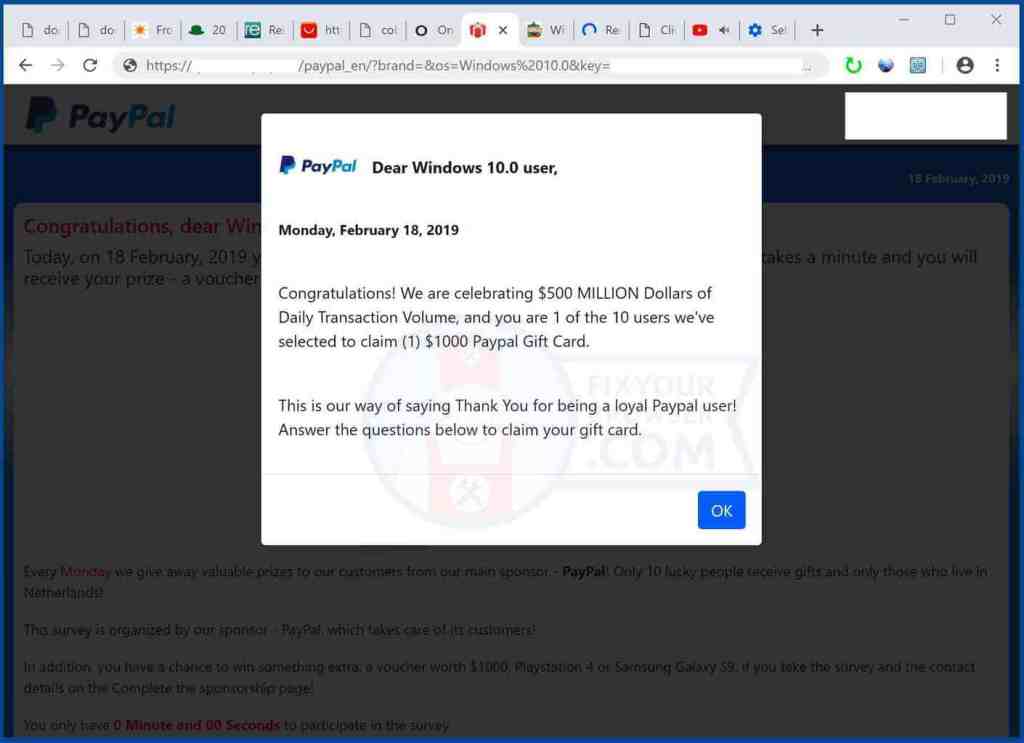
Website Ad Purpose
The success of any web ad is determined by the advertisement’s purpose, content and design. An advertisement without a clear purpose will not meet advertising goals and may end up confusing the viewer.
Web advertisements can have a number of purposes including (but not limited to):
- Encouraging the purchase of goods and services
- Bringing awareness to deals or promotions
- The education of your audience about a good or service (indirect way of encouraging the purchase of a good or service)
- Reinforcing your brand and creating more brand awareness
- Driving social media engagement
- New newsletter or email sign ups
When you understand your advertisement’s purpose, you can figure out what information needs to be in your advertisement. For example, a web ad meant to encourage shoppers to join a loyalty program, will contain different imagery and text then a web ad meant to criticize a competitor.
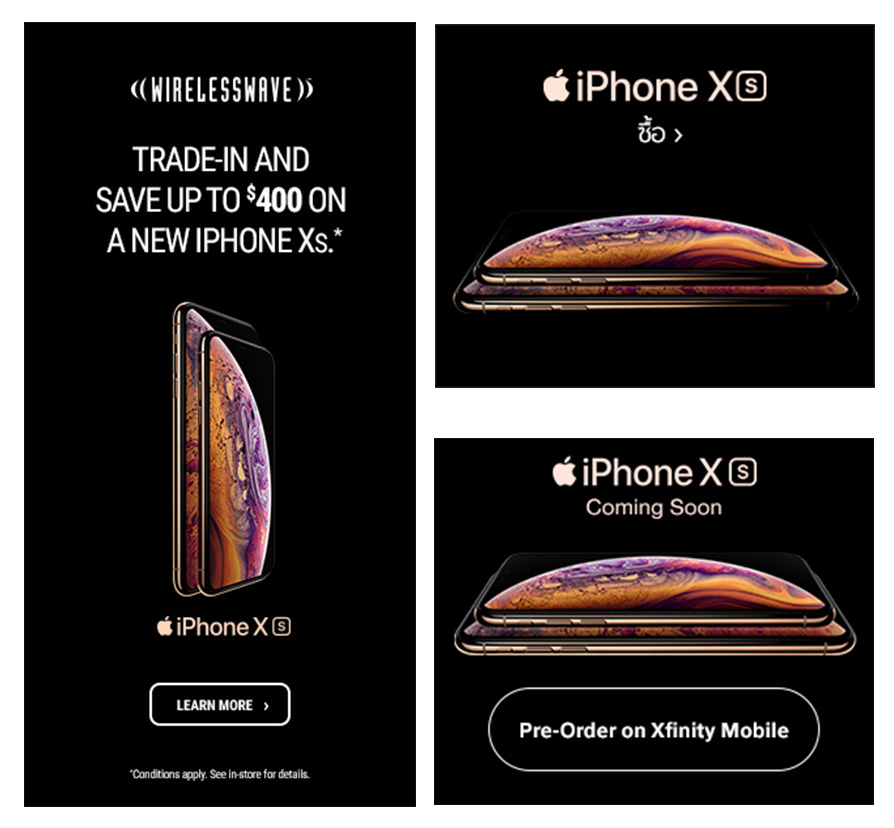
How To Identify A Web Ad’s Purpose & Objectives
Use the following questions to identify the purpose and objective for a web ad.
- Ask yourself – “What am I trying to do with this ad?” Are you trying to generate sales of a specific new product or get more Facebook likes?
- Identify a company’s specific advertising goals and pick one for your ad
- What should your customer think, feel, and do after viewing the ad?
- Is a specific element of your brand a key focus?
- How will this ad be distinctive or unique?
- What benefit will be shown in this ad?
Website Ad Content
Web ad content should be short and sweet. Use no more than four lines of text to get your visitors attention, convey your benefits, and direct them to the next step. Write your content to be relevant to both new and familiar site visitors.
Call to Action for Web Ads

In all of your marketing approaches, have a strong call to action. A call to action is a piece of content intended to induce a viewer, reader, or listener to perform a specific act, typically taking the form of an instruction or directive (e.g. buy now or click here ).
Some examples include:
- Try it for Free
- Get Your Free Report/Discount/Membership, etc
- Get Started Now
- Join Millions of Others
- Sign Up
- Send Me A Coupon
- Show Me How
- Subscribe
- Buy Now
- Give it a Try
- Launch Now
- Send Me Specials Now
Modify any of these samples with respect to your industry, target audience, and your advertising imagery and content. It is important to use a call to action. Call to actions are expected by users, they generate curiosity and anticipation, and can increase your conversion rates.
Design your Call to Action to be a contrasting color to the website and/or ad itself. It should stick out to the viewer! Although, your Call to Action should catch the eye, make sure the flow of your content makes sense, by placing your Call to Action after your value proposition. Otherwise, the website visitor may not engage with your ad.
Your ad structure should be as follows:
- Logo here
- Your Value Proposition (the benefit you are offering)
- End With a Call to Action (text or a button)
- or Logo here
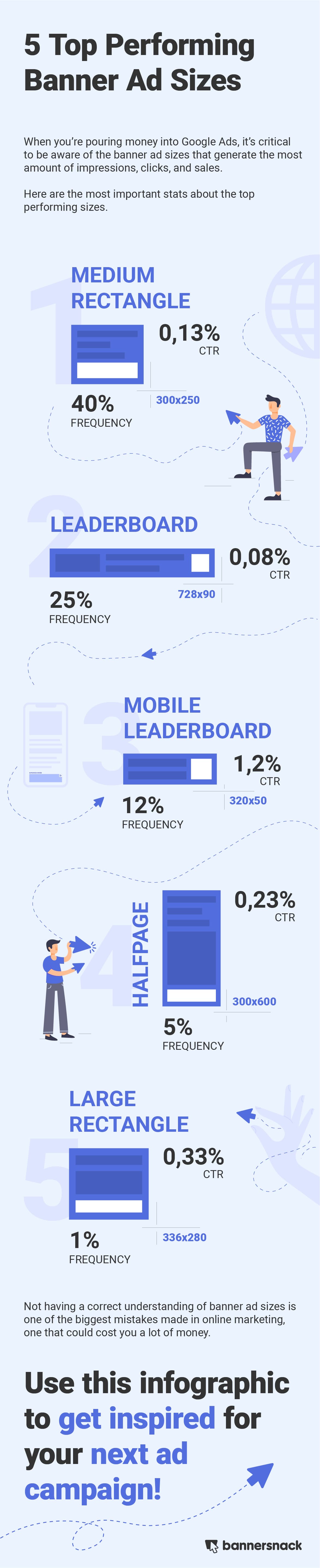
Best Performing Web Ads & Their Sizes
(Click image to enlarge)
Website Ad Imagery
Any imagery used in web ads should reinforce the value proposition. Imagery can help offer an explanation to humorous content, or trigger a vision in the audience’s mind. For online food delivery ads, including a delicious close-up of your fresh food is an excellent idea. Hotel advertisements could include imagery of vacationers enjoying the luxury and relaxation that comes with their hotel stay.
Choose your images wisely and use simple graphics or icons that can reinforce your brand, product benefits, and your culture. If imagery doesn’t support your value proposition or brand, don’t use it! Use typography and color choices that match the purpose of the ad.

Animated Ads
Animated advertisements outperform static ads. Animated ads engage site visitors for longer periods of time and have higher conversion rates. Remember to keep your animations simple and avoid being aggressive or pushy.
Ad File Size
Have you ever used a webpage that was slow? This is one of the biggest reasons why websites have high bounce rates (the percentage of visitors to a particular website who navigate away from the site after viewing only one page). Web ads can affect webpage load time.
Hence, keep your web ad file sizes small. This will keep the website fast and speedy. The Interactive Advertising Bureau (IAB) recommends a website ad file size of no more than 200 kb.

